The European Commission has formally proposed an action plan on fertilisers to combat soaring prices caused by the closure of the Strait of Hormuz and the Iran War.
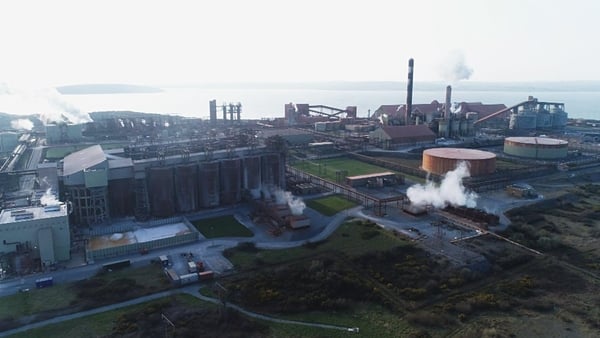
In a statement, the Commission said the plan would support those farmers facing rising fertiliser costs and scarcity as well as reinforce domestic fertiliser production in order to wean the agriculture sector off foreign imports.
"The Plan will directly help to ensure food security and reinforce Europe's strategic autonomy, while pursuing high climate and environmental goals," said the Commission in a statement.
"Recent supply disruptions and price volatility have put farmers across Europe under increasing pressure, exposing Europe's vulnerability to external shocks in fertiliser supply."
Ursula von der Leyen, the Commission president, said: "With this Action Plan, we are investing in a stronger European fertiliser industry, supporting European farmers and accelerating innovation in sustainable, home-grown solutions.
"The ongoing fossil fuel crisis shows that climate leadership and economic resilience are interlinked. This is why Europe is building a future based on sustainability, affordability and industrial strength."
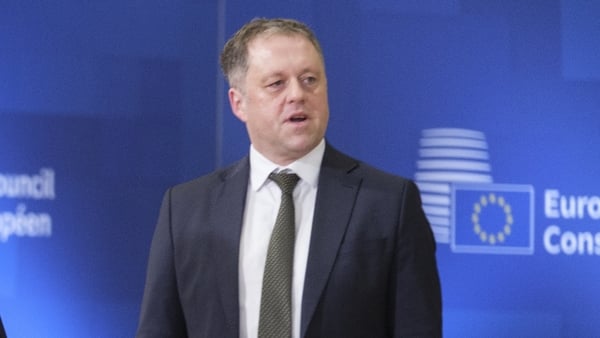
The action plan was launched this afternoon in Strasbourg by the EU's agriculture commissioner Christoph Hansen and commissioner for cohesion and reform Raffaele Fitto.
Last month the Commission announced the EU's state aid rules would be made more flexible to allow member states to address the immediate impact of the energy crisis, with further flexibility now being directed towards the fertiliser sector.
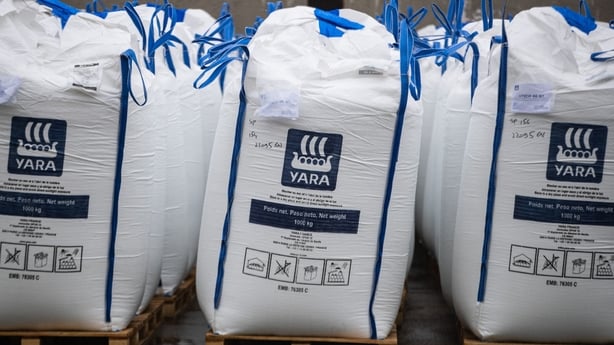
Member states will be encouraged to increase funding "within existing CAP envelopes" to create new eco and climate schemes to improve fertilisation efficiency, stimulate use of recycled nutrients and "strengthen farm resilience".
The Irish Government has lobbied for the Commission to exempt fertiliser from the EU’s tax on carbon-heavy goods that are imported into the single market from external suppliers, known as CBAM (Carbon Border Adjustment Mechanism).
The tax, which came into effect on 1 January, has added to the increased cost of fertiliser.
The Irish Farmers’ Association (IFA) reacted angrily to a leaked version of the Fertiliser Action Plan.
"We estimate that CBAM will cost EU farmers almost €900m in 2026. The Commission imposed this tax on farmers and has refused to reverse course despite the price of fertiliser more or less doubling in price.
"One would be forgiven for thinking that there are some in the Commission who welcome the massive increase in fertiliser prices. It’s hard to think any differently given their inaction on CBAM," IFA President Francie Gorman said.
He added: "Based on leaked versions of what will be announced tomorrow, the Commission’s Fertiliser Action Plan will do absolutely nothing to address either the availability or price of fertiliser.
"To consider publishing a Fertiliser Action Plan and not address CBAM is quite incredible. One would have to question if the Commission has any interest at all in addressing the price or availability of fertiliser across the EU."
Mr Gorman will join a protest by the pan-EU farming organisation COPA at the European Parliament in Strasbourg.
Ireland 'entirely dependent' on international supply chains
Reacting to the European Commission's fertiliser action plan, the Irish Co-operative Organisation Society (ICOS) warned that Ireland was particularly exposed given that it was "entirely dependent" on international supply chains, with 1.7 million tonnes of fertiliser imported in 2025.
The organisation called on the government to approve a €40m State-aid package to offset the soaring costs of imported fertiliser.
"The inordinate burden that will exist for Ireland, as the EU's CBAM carbon tax is levied on imported fertiliser from outside the EU, will cause fertiliser prices to skyrocket," the body said in a statement.
It said that while strong output prices in sectors such as dairy and tillage helped cushion the impact of soaring input costs in 2022, this was no longer the case.
"With current milk prices at approximately 37 cent per litre and continued downward pressure on output values, farmers and the wider supply chain simply cannot absorb further cost shocks."
ICOS said every effort was being made by co-operatives and suppliers to secure adequate fertiliser supplies for the remainder of this year, thanks in part to suppliers buying fertiliser in bulk before the CBAM took effect on 1 January.
"However the outlook for 2027 is highly uncertain, with the potential for a deep crisis ahead.
"Every day that the Strait of Hormuz remains disrupted increases the risks facing farmers, co-operatives and the wider food production sector. Unless preparations are made now by both the European Commission and the Irish Government, the impact of this crisis could intensify significantly next year," ICOS said.