


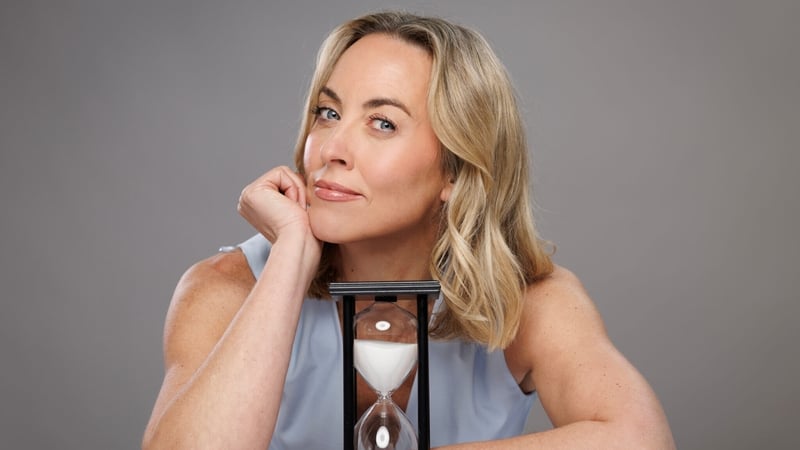

TV presenter Kathryn Thomas returns to RTÉ One and RTÉ Player on Monday, 20 April, at 9.35pm with the second part of her latest documentary, Young Forever: The Death of Ageing?.
The two-part RTÉ series sees Thomas explore the boom of anti-ageing science and the rapid rise of 'tweakments' - wading through the scientifically-backed research and the too-good-to-be-true scams.
As part of her investigation, she undergoes a series of tests to see how her own body is faring as a 47-year-old fitness fanatic and mother of two.
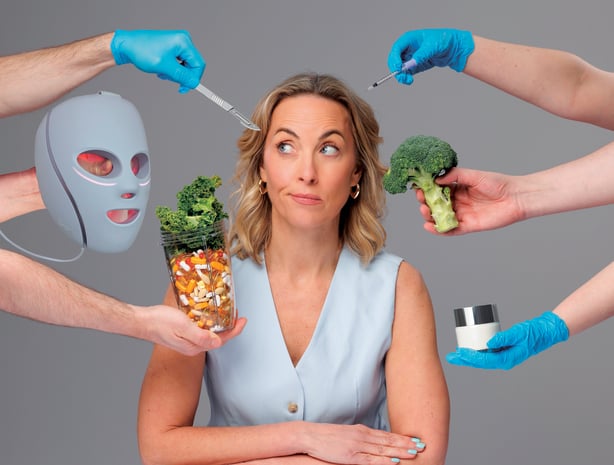
Meeting with UK-based Longevity Doctor Sabine Donnai of Longevity Clinic Viavi, she had her 'biological flashpoints' tested as part of a Longevity Blood Panel.
"I had to get 247 blood markers done! I didn't even know you could test for 247 blood markers," she says, speaking over Zoom from her podcast studio.
As the founder of Pure Results Fitness Retreats and the former host of health and fitness reality TV series Operation Transformation, it comes as no surprise that Kathyn's results were largely positive.
"My cancer markers, my fitness markers, my general health markers were good and solid," she explained. "That was good to get reassurance on; there was nothing that raised its head from a sinister perspective."
Despite this, she says she fell down in two areas - one of which can only be expected when raising young children, while the other came as a total surprise.
"They found something called glyphosate in my system," she says, explaining the shock results.
A pesticide linked to certain cancers and Alzheimer's, glyphosate was formerly used in a popular chemical weedkiller in Ireland, which Kathryn says was "lashed" around during her childhood in Carlow.
"They reckon it's been in my system for 30 years," she continues.
"It hasn't caused me any issues so far, but is it still in my head? Yes. I know it's in there now, so I'm still trying to get my head around it."
Although a treatment called Apheresis is available - a 'blood purification procedure' that passes separated blood plasma through a highly specialised filter before returning the cleansed materials to your body - it comes with a hefty pricetag.
"There's always something to sell," she says, grimly.
The second and more expected issue for the radio presenter, podcaster, documentary maker, fitness bootcamper, and mother of two? Cortisol levels.
A hormone produced by the adrenal glands, cortisol plays an important role in the stress response. According to the Mayo Clinic, it is believed that maintaining an adequate balance of cortisol is "essential for health".
"Normally, you have cortisol spikes in the morning and then it kind of dips during the day, but because I'm having a run of not sleeping very well, she [Dr Donnai] was very concerned that my cortisol levels are flatlining."
"That is a big indicator of burnout," she continues. "As a mother of young kids, and trying to do four different jobs and somebody who is generally energised anyway, she kind of feels that I've forgotten how to switch off."
"That's caused me probably even more cortisol now," she jokes, "the stress of that!"
'The fast growing rejuvenating surgery in Ireland is a eye lifting procedure called a blepharoplasty. But is the bleph really becoming the new botox?'
— RTÉ One (@RTEOne) April 17, 2026
Kathryn Thomas's latest documentary #ForeverYoung: The Death of Ageing explores the quest to delay the ageing process 📺 Catch… pic.twitter.com/lzUJUDqJOO
Blood purification treatments aside, Thomas says she has picked up a number of new habits since filming the documentary in a bid to keep her body that little bit healthier.
Her first step was to bring air filters into the house, as well as one on top of the vacuum cleaner, "to stop the plastic particles that are swimming around".
A water filtration system is on route, and she is adamant that all fruit and veg will now be washed in bicarbonate of soda before being eaten.
"Apparently, any pesticides that have been sprayed, the bicarbonate of soda can minimise."
Finally, she had a clear out of the kitchen.
'It is estimated we have 100 times more plastic in our bodies than we did in the 1970's' #ForeverYoung: The Death of Ageing explores the science shaping longevity & the hope of extending human life. Catch episode two THIS Monday, 9:35pm on @rteone 📺 pic.twitter.com/HRtNGZYt61
— RTÉ One (@RTEOne) April 18, 2026
According to the University of Queensland, scratched or damaged non-stick pans may release particles or harmful chemicals and should be replaced. Not only that, but overheating non-stick cookware can release toxic fumes, and immersing non-stick pans in cold water right after cooking can compromise the coating.
"I got rid of all my saucepans," Kathryn confirms.
"Toxicologist Tara McMorrow in UCD looked at all my saucepans and basically said that they were not fit for purpose. They were rusty at the bottom and scraped off. It's what I make the kids' porridge and eggs in, so she scared the s**t out of me, and basically said 'change all your saucepans', so I did that as well!"
"They were all the kind of things that I could do in the price range that I thought was a good judgment call, as opposed to paying €10k to get my blood taken out of my body!"
Watch Young Forever: The Death of Ageing? on RTÉ One and RTÉ Player on Monday, 20 April, at 9.35pm.
