


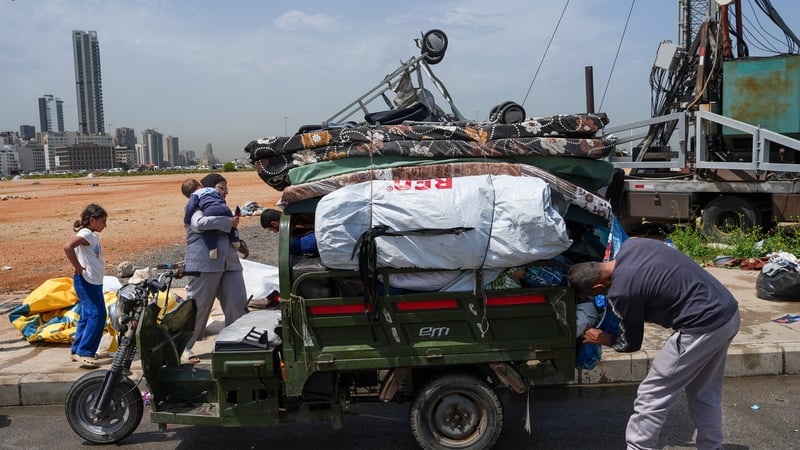
Lebanese President Joseph Aoun has said his country is on the verge of a "new phase" of "permanent agreements", after the ten-day ceasefire in the Israel-Hezbollah war went into force.
In a speech addressing the Lebanese people and hinting at the Iran-backed Hezbollah militant group the day after US President Donald Trump announced the truce, Mr Aoun said that his country was no longer "an arena for anyone's wars".
Lebanon was drawn into the Middle East conflict on 2 March when Tehran-backed Hezbollah attacked Israel to avenge the death of Iranian supreme leader Ali Khamenei.
Israel responded by firing waves of strikes on Lebanon and launching a ground offensive, killing nearly 2,300 people and displacing more than a million.
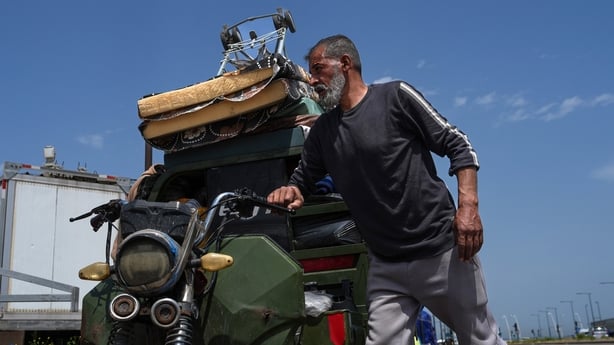
"Now, we all stand before a new phase," Mr Aoun said in his first speech to the nation since the truce.
"It is the phase of transition from working on a ceasefire to working on permanent agreements that preserve the rights of our people, the unity of our land, and the sovereignty of our nation," he said.
He said the Lebanese government had "reclaimed Lebanon and Lebanon's decision-making power for the first time" in nearly half a century.
"Today, we negotiate for ourselves... we are no longer a pawn in anyone's game, nor an arena for anyone's wars, and we never will be again," he added.
Israel banned from bombing Lebanon, Trump says
US President Donald Trump has said that the US has banned Israel from further bombing in Lebanon, using an atypically harsher tone than usual with its longtime ally.
"Israel will not be bombing Lebanon any longer. They are PROHIBITED from doing so by the U.S.A. Enough is enough!!!" Mr Trump said in a social media post.
Mr Trump also said any deal the US reaches with Iran "is in no way subject to Lebanon" but the US will "deal with" the militant Hezbollah situation in an appropriate manner.
The US president also said the US will get nuclear material from Iran.
"No money will exchange hands in any way, shape, or form." he said.
A ten-day ceasefire between Lebanon and Israel came into effect last night, and Mr Trump said the next meeting between the US and Iran may take place over the weekend, adding to optimism that the Iran war could be nearing an end.
Iran says its enriched uranium 'not going to be transferred'
Iran's foreign ministry said the country's stockpile of enriched uranium would not be transferred "anywhere", denying an earlier claim by Mr Trump that the Islamic republic had agreed to hand it over.
"Iran's enriched uranium is not going to be transferred anywhere," Iranian foreign ministry spokesman Esmaeil Baqaei told state TV.
"Transfer of Iran's enriched uranium to the US has never been raised in negotiations," he added.
Mr Trump posted on his Truth Social platform earlier: "The U.S.A. will get all Nuclear 'Dust,' created by our great B2 Bombers," referring to enriched uranium buried by US strikes last year.
But Mr Baqaei said recent talks centred on solving the conflict and not on recovering Iran's uranium.
"The previous negotiations focused on the nuclear issue, but now the negotiations are focused on ending the war, and naturally the range of topics discussed has become wider and more diverse," he said.
"The ten-point plan for lifting sanctions is very important to us. The issue of compensation for the damages incurred during the imposed war is of particular importance."
Strait of Hormuz 'open' but US blockade of Iran 'in full force'
He welcomed Iran's announcement that the crucial Strait of Hormuz will reopen to shipping, but said a US blockade of Iranian ports would continue until a peace deal is signed.
"THANK YOU!" Mr Trump wrote on his Truth Social platform, saying that Iran had announced the narrow waterway was "FULLY OPEN AND READY FOR FULL PASSAGE."
In a second message a few minutes later, Mr Trump posted: "The naval blockade will remain in full force and effect as it pertains to Iran, only, until such time as our transaction with Iran is 100% complete."
We need your consent to load this rte-player contentWe use rte-player to manage extra content that can set cookies on your device and collect data about your activity. Please review their details and accept them to load the content.Manage Preferences
"This process should go very quickly in that most of the points are already negotiated," Mr Trump said, using his trademark style of all-capital letters.
Iran's Foreign Minister Abbas Araghchi had announced earlier tody that the strait, vital for the global trade in oil and other commodities, will remain "completely open" as long as a ceasefire in the Middle East lasts.
It was not immediately clear if he was referring to a ten-day truce agreed by Lebanon and Israel that went into effect at midnight local time or an earlier two-week truce between Iran and the US that began on 8 April.
Trump says Iran deal 'very close'
Mr Trump said Iran had offered not to possess nuclear weapons for more than 20 years. Tehran's nuclear ambitions were a sticking point at talks in Islamabad last weekend.
"We're going to see what happens. But I think we're very close to making a deal with Iran," he told reporters outside the White House.
Hours later at an event in Las Vegas, Nevada, Mr Trump went further, saying the war "should be ending pretty soon".
The war with Iran, which began on 28 February with a US-Israeli attack, has killed thousands and sent oil prices surging, creating a major political headache for the US president.
If the Lebanon ceasefire clears the way for a broader peace deal with Iran, it would be a significant win for the Trump administration, which has struggled so far to reopen the strategically important Strait of Hormuz and block Iran's path to a nuclear weapon.
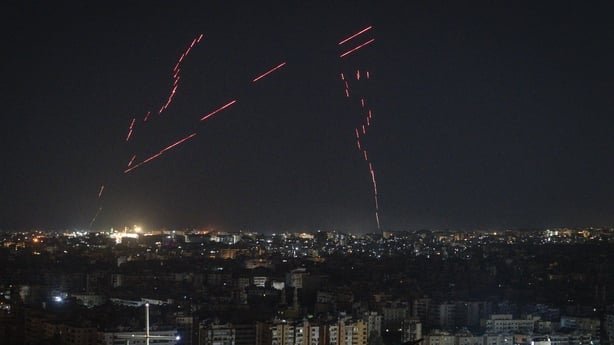
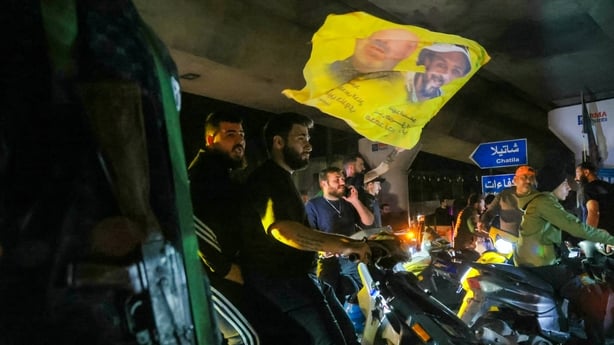
Celebratory gunfire rang out across parts of Beirut as the clock struck midnight local time (10pm Irish time) last night, the time the ceasefire was set to go into effect.
For around half an hour, the sound of explosions from rockets fired in celebration could also be heard, witnesses said. But the pause in hostilities remained fragile.
The Lebanese Army said that Israel committed violations of the ceasefire after it took effect, including the intermittent shelling of several southern Lebanese villages.
There was no immediate comment from the Israeli military, which had said earlier that its forces remained deployed in the area.
In a post on X, Arabic-language military spokesperson Avichay Adraee said the deployment was in response to what he described as continued Hezbollah militant activity.
Hezbollah released a lengthy statement detailing what it described as its military operations against Israel throughout yesterday, which showed that its last attack came at 11.50pm local time, ten minutes before the ceasefire took effect.
Mr Trump later issued a social media post urging Hezbollah to respect the ceasefire.
"I hope Hezbollah acts nicely and well during this important period of time. It will be an GREAT moment for them if they do. No more killing. Must finally have PEACE!" he said.
Read more:
Lebanon ceasefire agreement significant on number of fronts
Further Israel-Lebanon talks planned
Mr Trump said he thought the US had a chance of a deal with Iran.
"And if that happens, oil goes way down, prices go way down, inflation goes way down, and ... much more importantly than even that, you won't have a nuclear holocaust," he said.
The president said he was not sure a two-week ceasefire agreed with Iran last week would need to be extended beyond next week and added that Tehran wanted to make a deal.
"We have a very good relationship with Iran right now, as hard as it is to believe. And I think it's a combination of about four weeks of bombing, and a very powerful blockade," he said.
