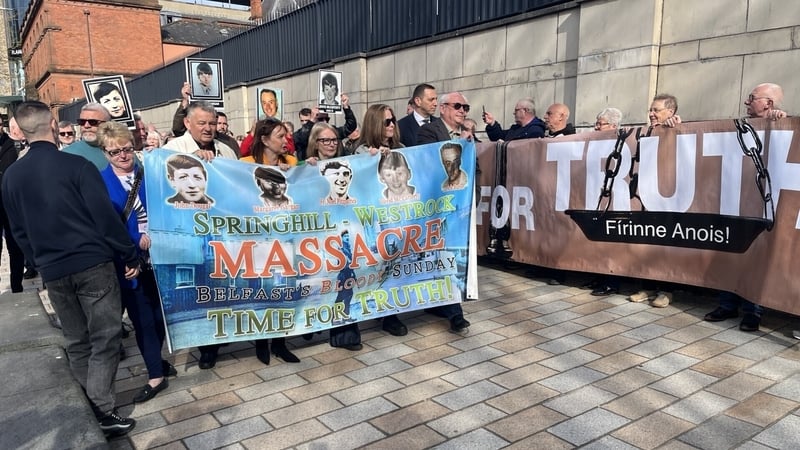

British soldiers who shot dead a number of people, including a Catholic priest, in Belfast more than 50 years ago "lost control", a coroner has said.
The five people were killed by soldiers in the Ballymurphy area in July 1972.
It took Mr Justice Schofield most of the day to deliver his 640-page ruling.
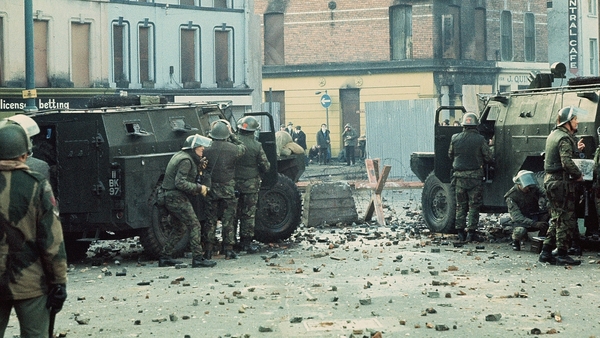
He said that the shootings had happened at a volatile period during the breakdown of an IRA ceasefire in the city.
The British Army's position was that the killings happened during a sustained gun battle.
The coroner said there may have been some "sporadic" firing by the IRA but the soldiers had not opened fire in response to a "co-ordinated" attack on their position.
He said the soldiers had "overreacted to perceived threats and ultimately lost control".
The victims were a 13-year-old girl, two other teenagers, a father-of-six and a Catholic priest.
The killings of 16-year-old John Dougal, David McCafferty (15), Margaret Gargan (13), Paddy Butler (38) and Fr Noel Fitzpatrick (42), all happened in the Springhill/Westrock area of Ballymurphy.
Two other people were injured.
They were fired on by members of the 1 Kings Regiment stationed in a timber yard close to Ballymurphy in west Belfast on 9 July 1972.
The incident began when something "triggered" soldiers to open fire on two cars in the locality.
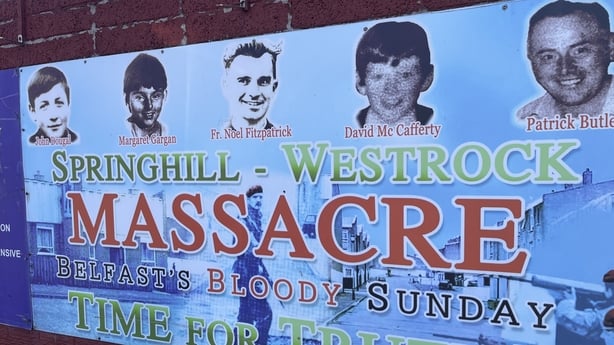
He said the soldiers may have overreacted during the breakdown of the IRA ceasefire; the murder of two members of the Kings Regiment earlier that evening; and the call for IRA units to recommence attacks.
The coroner said one of the victims, John Dougal, was an acknowledged member of Na Fianna - the juvenile wing of the Provisional IRA.
While the coroner found there was suspicious activity happening in the vicinity that evening he said he was unable to determine whether John Dougal had been armed when he was killed.
But he said the 16-year-old had been shot in the back while running away and as a result the force used by the soldier responsible had not been reasonable and had been outside the rules of engagement under the British Army's Yellow Card rule.
The teenager should not have been shot dead in those circumstances, the coroner said.
Mr Justice Schofield said Fr Noel Fitzpatrick had gone to tend to the dead and dying in the area.
He was shot at the same time as Patrick Butler who was assisting him.
Ballistics suggested both were killed by the same bullet.
Neither had been armed and the coroner discounted an army suggestion that Fr Fitzpatrick might have been seeking to retrieve a weapon when he was shot.
The coroner suggested that may have been proffered as an excuse for killing a priest.
Both were "wholly innocent victims", the coroner found.
15-year-old David McCafferty was also in the same area. The coroner found that he had been hit potentially as he went to help retrieve Fr Fitzpatrick's body.
While he had been a member of the junior wing of the Official IRA, the coroner found he had not been armed and was not posing a threat when he was shot by the same soldier who killed Fr Fitzpatrick and Paddy Butler.
The teenager had been unarmed and was not involved in any offensive action, the coroner found.
The coroner said the soldier had opened fire from a position around 100m away and would have had a clear view.
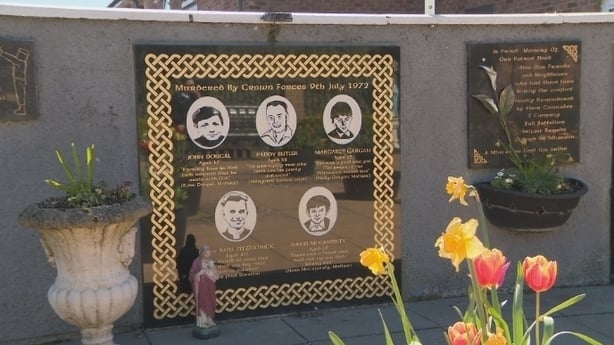
The coroner concluded that the soldier must have known that no weapon was present and that he had "lost control" and opened fire on the group "without a proper assessment" of whether any threat was being offered.
The coroner said the case of Margaret Gargan was the one he found "least difficult" to resolve.
He said the 13-year-old had been hit by a direct, aimed shot as she talked to her friends .
She died immediately.
The coroner said it was difficult to second guess what had been in the soldier's mind.
He ruled that the soldier "had opened fire prematurely having lost control" following the first episode of shooting in the area and without having made a proper assessment of any risk posed.
The coroner said if he had reached such a conclusion it had been unreasonable.
He said the soldier's suggestion that he had opened fire on a gunman had been "self-serving".
Margaret Gargan had also been "wholly innocent", the coroner said.
The coroner said that soldiers who'd been interviewed at the time by the Royal Military Police had been given a cipher.
The cipher list which identified them by name had since been lost along with other military documents.
The coroner said it was "unclear how this came to be".
He said this lack of documentation made it difficult to identify the soldiers who fired the fatal shots.
He said none of the soldiers who gave evidence had been prepared to identify themselves as one of the ciphered soldiers.
He also said the IRA had failed to engage with the inquest in order to provide "clarity".
The coroner said he would take submissions on whether his ruling should be referred to the public prosecution service.
He said it seemed that such a referral would be necessary.
But he cautioned the relatives that due to the passage of time and the difficulty of identifying those responsible for the fatal shots, there was little prospect of prosecutions.
Relatives applauded as the coroner left the court.
We need your consent to load this rte-player contentWe use rte-player to manage extra content that can set cookies on your device and collect data about your activity. Please review their details and accept them to load the content.Manage Preferences