


A US official has told the International Court of Justice that there were "serious concerns" about the impartiality of the UN agency for Palestinian refugees, UNRWA.
ICJ judges are holding a week of hearings to help them formulate an advisory opinion on Israel's obligations towards UN agencies delivering aid to Palestinians in Gaza.
"There are serious concerns about UNRWA's impartiality, including information that Hamas has used UNRWA facilities and that UNRWA staff participated in the October 7th terrorist attack against Israel," Josh Simmons from the US State Department legal team claimed.
Around 40 nations and organisations such as the League of Arab States are taking part in the hearings.

Israel is not participating at the ICJ, but has claimed the hearings are "part of the systematic persecution and delegitimisation" of the country.
Mr Simmons claimed Israel had "ample grounds" to question UNRWA's impartiality.
"Given these concerns, it is clear that Israel has no obligation to permit UNRWA specifically to provide humanitarian assistance. UNRWA is not the only option for providing humanitarian assistance in Gaza," he claimed.
The status of UNRWA is central to the hearings.
Israel has banned it from operating on Israeli soil, after accusing some of its staff of taking part in Hamas' 7 October 2023 attack that sparked Israel's Gaza war.
A series of investigations, including one led by former French foreign minister Catherine Colonna, found some "neutrality-related issues" at UNRWA, but stressed Israel had not provided evidence for its headline allegation.

UNRWA head Philippe Lazzarini said yesterday that more than 50 of its staff in Gaza were abused and used as human shields while in Israeli military detention.
Israel strictly controls all inflows of international aid vital for the 2.4 million Palestinians in Gaza.
Israel halted all aid deliveries to Gaza on 2 March, days before it breached and collapsed a ceasefire that had significantly reduced hostilities after 15 months of war.
Supplies are dwindling due to Israel’s blockade and the UN's World Food Programme said on Friday it had sent out its "last remaining food stocks" to kitchens.
'Starvation is here'
In December, the UN's General Assembly asked the ICJ for an advisory opinion "on a priority basis and with the utmost urgency".
However, it will likely take several months for judges to form their opinion, and the international medical aid organisation Doctors Without Borders (MSF) warned time was running out.
"Waiting for any kind of legal recourse...will condemn yet more Palestinians to avoidable death, while the world watches on impassively, doing nothing to avoid this indiscriminate and abhorrent cruelty," said MSF official Claire Nicolet.
On Monday, Palestinian delegate Ammar Hijazi accused Israel of blocking humanitarian aid as a "weapon of war".
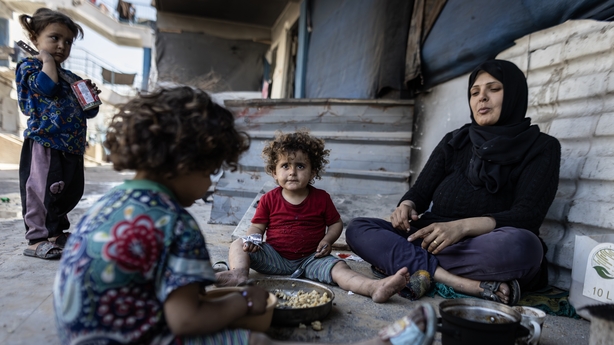
"Nine of every ten Palestinians have no access to safe drinking water. Storage facilities of the UN and other international agencies are empty," Mr Hijazi added.
"These are the facts. Starvation is here," he said.
Although ICJ advisory opinions are not legally binding, the court believes they "carry great legal weight and moral authority".
Mr Simmons claimed that the court should not focus on what he called a "one-sided" question relating only to Israel.
"There should be no finding either as to compliance with any obligations identified in this proceeding or as to the legal consequences of any alleged breach," he said.
