

By Máire Treasa Ní Cheallaigh
Many often assume that burnout is a physical thing.
It’s as big a factor mentally as it is on the body. There is much talk about mental health out there, it’s a broad subject, affecting us all differently.
Recently, there was a discussion on radio about the perception that GAA players are forced into committing their lives to their sport.
The consensus among the participants was that yes, players sacrifice a lot to reach the pinnacle of their chosen game, however, nobody forced them into it.
And that’s true. Nobody is holding a gun to their heads. There’s no law stating they must tog out.
And yes, the assumption is, there’s many who would swap with them given half a chance.
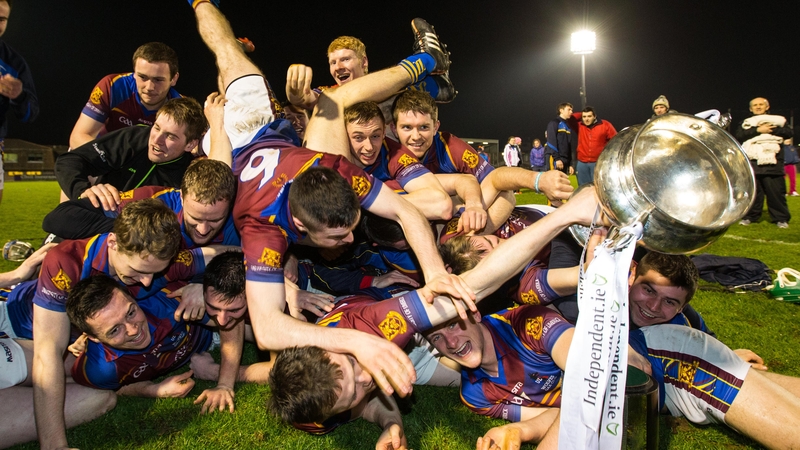
At this time of year, with the college competitions taking off, talk of burnout re-emerges, as so many are playing Under 21s (although the grade is changing next year), while also playing senior for their county, and then also line out for their Sigerson or Fitzgibbon college team.
The talk about burnout often only extends to the physical training.
Overloading the body, also overloads the mind. It’s a catch 22 situation.
They want to play. They want to line out for their county, they want to impress all their managers, who rarely all sing off the same hymn sheet when it comes to player management.
The players are training like elite athletes, while trying to earn their qualification, find their way in the world while growing into adults, but without the same room for self-discovery.
Some years ago, WGPA chairperson Aoife Lane wrote a report about the challenges faced by student players.
Half of student players felt overwhelmed by their commitments, and more than half wanted more time for their studies, and crucially, more time for friends and family.
International research has shown that players are often athletes first, students second. The potential implications are obvious; impaired academic success, and a lack of personal and emotional development.
It’s common now for the college-going Gaelic games player to cut themselves off from the social lives of their peers, save for a small window at the start of the academic year, unless of course their club is still in the championship.
Many county players also must return to their team for training, despite being away at college.
Tales of players making three or four hour round trips to attend training sessions are told up and down the country, and travelling with them is the fear that their place on the county panel could be in jeopardy if they don’t attend.
Oh, and they have to attend classes as well, and turn in assignments and pass exams. It’s no wonder that sometimes their emotional well-being takes a hit.
There is evidence, both anecdotal and scientific, that student players are in a state of constant conflict, trying to do it all and suffering psychologically.
This directly contradicts the advice of researchers in student athleticism, who recommend full engagement in college life, while developing their life and sporting skills.
Instead, we have a sub-culture of GAA college players attending gym sessions at times dictated by managers often in a different county, or travelling long distances to train, observing alcohol bans, essentially cut off from the rest of the student body.
Stress and anxiety can be the result. Balance is often lost, the ‘fun’ side of college not lived.
The consequences of burnout are severe. Injury, mental distress, and the risk that when the enjoyment is gone, players end up leaving the sport.
Of course, this isn’t true for all players. Some find balance, some are far-sighted enough to know that sport isn’t going to be there forever, but that degree on their wall, will be.
A student, who pulls off the balancing act, will benefit both on and off the field. It builds resilience, and discipline and organisational skills.
This creates focus, in the game and outside the white lines. This is a skill they will take into their professional and personal lives.
Sacrifices do have to be made if one is to succeed in any walk of life. But how far is too far?
Is it acceptable that players in their late 20s can now point to the intensive training of their youth and say that caused an injury that now is forcing them to retire?
Is it right that they don’t do as well as they could in exams, or that their emotional development is potentially curtailed?
At this age, young people are often just finding their feet in the world, and are still learning the skill of assertiveness, and often won’t question any regime for fear of not playing.
They’re not forced to play, but it’s seen as the only way to compete at the highest level of the game.
* Máire Treasa Ní Cheallaigh is a journalist with RTÉ and has a Masters in Sport, Exercise and Performance Psychology.
